Camilla Cavendish: A Powerful Voice Shaping Policy, Journalism, and the Future of Britain
From Newsrooms to the House of Lords — Insightful, Influential, and Not Without Controversy

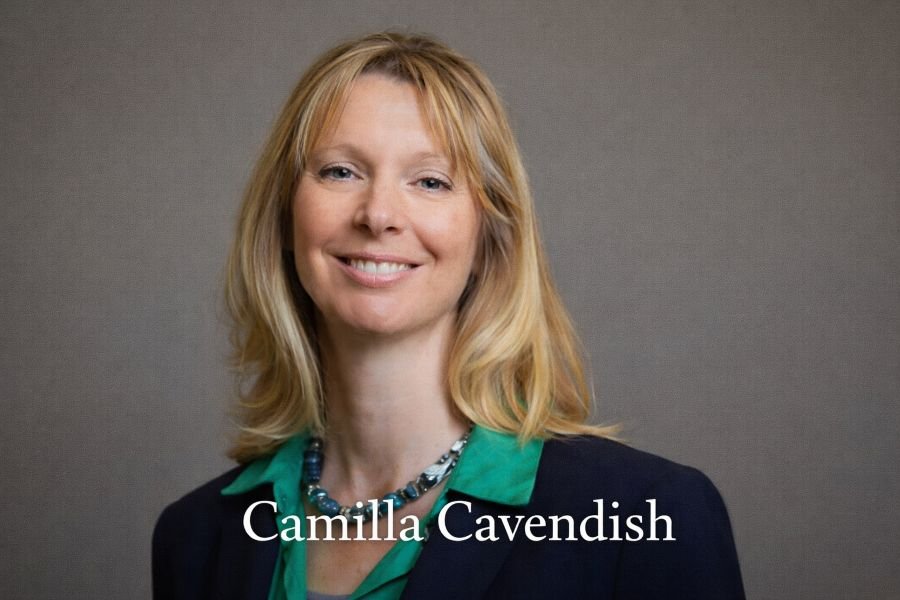
Table of Contents
ToggleIntroduction
Camilla Cavendish is one of the most influential British thinkers of the modern era, known for her ability to move seamlessly between journalism, public policy, and political power. As a respected columnist, policy adviser, and Member of the House of Lords of the United Kingdom, she has shaped debates on health, social care, and demographic change with clarity and conviction. Her work is widely praised for its intellectual depth, yet it has also drawn criticism for challenging established systems and orthodoxies.
Widely recognised by her full name, Hilary Camilla Cavendish, and formally titled Baroness Cavendish of Little Venice, she represents a rare blend of analytical rigor and real-world influence. This article explores her life, education, career, achievements, and lasting legacy, presenting a complete, verified, and authoritative biography designed for both human readers and search engines.
Quick Bio
| Attribute | Details |
|---|---|
| Full Name | Hilary Camilla Cavendish |
| Known As | Camilla Cavendish |
| Title | Baroness Cavendish of Little Venice |
| Date of Birth | 20 August 1968 |
| Age | 57 years |
| Birthplace | England, United Kingdom |
| Nationality | British |
| Profession | Journalist, Policy Adviser, Author, Life Peer |
| Education | Oxford University (PPE), Harvard University (MPA) |
| Spouse | Huw van Steenis |
| Children | Three |
| Current Role | Member of the House of Lords |
Early Life and Education
Camilla Cavendish was born in England into an intellectually rich environment that strongly influenced her later career. Growing up in a family that valued history, writing, and critical thought, she developed an early interest in public affairs and social issues. This formative background played a crucial role in shaping her analytical mindset and commitment to evidence-based debate.
She was educated at Putney High School in London before attending Brasenose College at the University of Oxford. There, she studied Philosophy, Politics and Economics, graduating with first-class honours. Her academic excellence continued at Harvard University’s Kennedy School of Government, where she earned a Master of Public Administration as a Kennedy Memorial Trust Scholar, further sharpening her global policy perspective.
Start of Career and Early Professional Path
Before becoming a public-facing journalist, Camilla Cavendish began her career as a management consultant at McKinsey & Company. This early professional experience exposed her to complex organisational challenges, strategic decision-making, and economic analysis, all of which later informed her journalism and policy work.
She later moved into roles connected to business advocacy and urban regeneration, gaining firsthand experience in how policy decisions affect communities and institutions. These early roles laid the groundwork for her transition into journalism, where she would combine analytical precision with investigative depth.
Journalism Career and Influence
Camilla Cavendish built a formidable reputation as a journalist through her work at major British newspapers. At The Times, she served as an associate editor and later as chief leader writer, producing influential commentary on social policy, healthcare, and government accountability. Her writing was widely read for its clarity and courage, though it sometimes attracted criticism for challenging entrenched interests.
She later wrote for The Sunday Times before becoming a contributing editor and weekly columnist at the Financial Times. In this role, she has consistently addressed complex topics such as public services, demographic change, and economic reform, helping readers understand policy implications without oversimplification.
Transition into Government and Policy Leadership
In 2015, Camilla Cavendish made a decisive shift from journalism into direct government service when she was appointed Head of the Prime Minister’s Policy Unit. Serving at the heart of UK government, she played a key role in shaping policy discussions, particularly in areas related to health and social care.
This transition was praised by supporters as a natural extension of her expertise, while critics questioned the move from commentator to policymaker. Nevertheless, her tenure demonstrated her ability to operate effectively within government, balancing political realities with long-term policy thinking.
Role in the House of Lords
Following her government service, Camilla Cavendish was appointed a life peer in 2016, taking the title Baroness Cavendish of Little Venice. As a Member of the House of Lords of the United Kingdom, she sits as a crossbench peer, maintaining independence from party politics.
In the Lords, she has focused on legislation and debates related to health systems, social care, workforce issues, and demographic change. Her contributions are often praised for being informed, measured, and grounded in real-world evidence rather than ideology.
Academic and Thought Leadership
Alongside her political and journalistic work, Cavendish has maintained a strong academic presence. As a Senior Fellow at Harvard’s Kennedy School of Government, she engages in research and teaching focused on public policy and societal change.
Her academic role reinforces her reputation as a thinker who bridges theory and practice, ensuring that her ideas are not only intellectually sound but also practically applicable in policymaking environments.
Authorship and Intellectual Contributions
In 2019, Camilla Cavendish published Extra Time: Ten Lessons for an Ageing World, a book that examines how societies can adapt to longer lifespans and changing demographics. The book was widely discussed for its global outlook and pragmatic recommendations, positioning her as a leading voice on ageing and longevity policy.
The work reflects both her strengths and criticisms: admired for its insight and clarity, yet challenging conventional approaches to welfare, work, and healthcare.
Legacy and Impact
Camilla Cavendish’s legacy lies in her ability to influence public debate across multiple platforms. She has helped reshape conversations around health, social care, and ageing, not only in the UK but internationally. Her career demonstrates the power of combining journalism, policy expertise, and political engagement.
While some critics view her influence as controversial, even they acknowledge her role in pushing difficult but necessary discussions into the mainstream. Her impact is defined as much by debate as by consensus.
Conclusion
Camilla Cavendish stands as a powerful example of how ideas can move from the page to policy and into law. Through journalism, government service, and her role in the House of Lords, she has consistently shaped how Britain thinks about its future. Admired by many and challenged by others, her career reflects the complexity of modern leadership in public life.
Frequently Asked Questions
Who is Camilla Cavendish?
Camilla Cavendish is a British journalist, policy adviser, author, and life peer, formally known as Baroness Cavendish of Little Venice.
What is Camilla Cavendish known for?
She is best known for her influential journalism on public policy and her role as a Member of the House of Lords of the United Kingdom.
What is her educational background?
She studied Philosophy, Politics and Economics at the University of Oxford and later earned a Master of Public Administration from Harvard University.
Is Camilla Cavendish affiliated with a political party?
No, she sits as a crossbench peer in the House of Lords, remaining independent of party politics.
Has Camilla Cavendish written any books?
Yes, she authored Extra Time: Ten Lessons for an Ageing World, focusing on longevity and demographic change.